This post may contain affiliate links. If you buy through them, StashGamer may earn a commission at no extra cost to you — this never affects our editorial opinions. See our advertising & affiliation policy.
Verdict
The Razer Enki hits a genuinely good middle ground: a wide, welcoming seat that suits long sessions and a fair price, undercut only by cushioning that softens noticeably after months of heavy daily use.
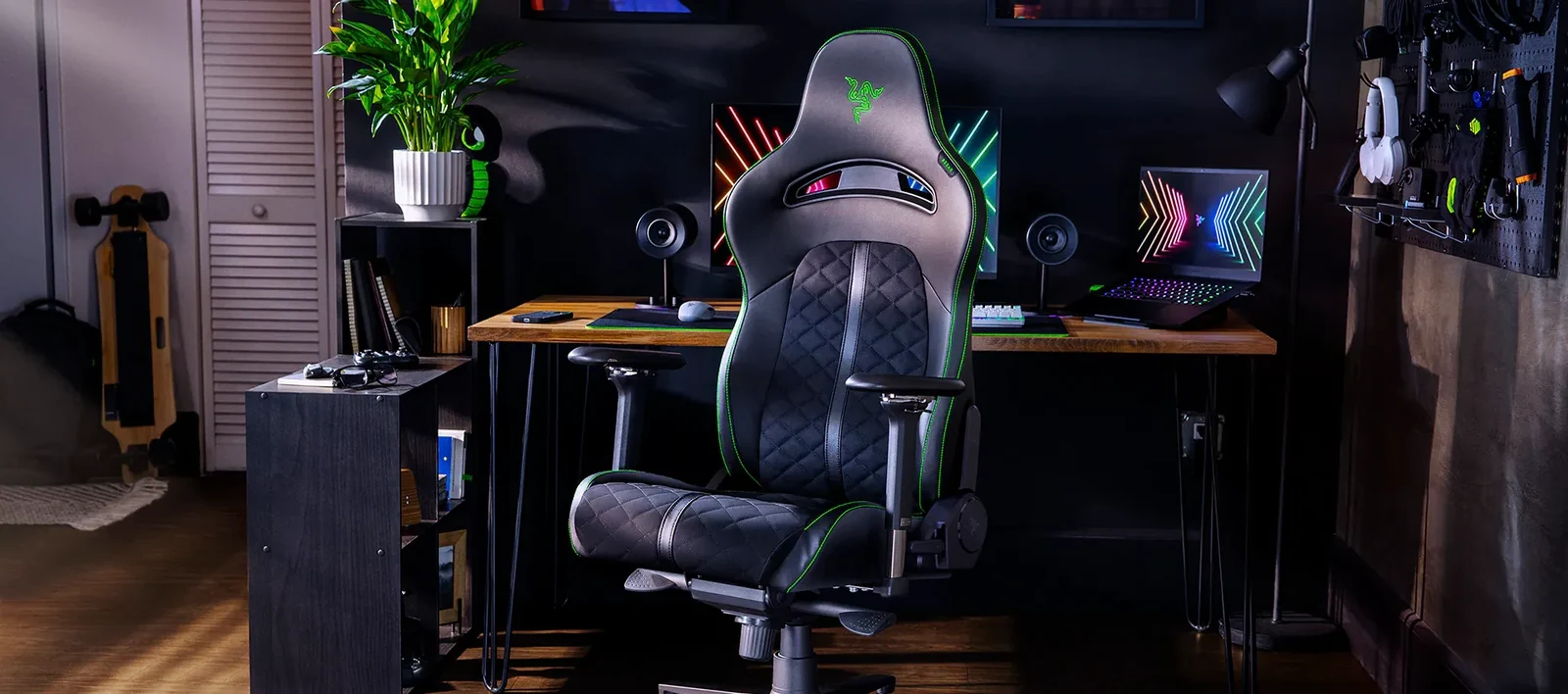
Razer isn't the first name that comes to mind for gaming chairs, but the Enki has built a real following since launch, largely on the strength of one design choice: it's simply wider than most of its competitors. We spent several weeks putting it through daily gaming and work sessions to see whether that translates into genuinely better comfort, or just a different shape.
The pitch: built for bigger frames and longer sessions
At $400, the Enki sits squarely in the mid-range, and its defining feature is a 21-inch ultra-wide seat base paired with 110-degree extended shoulder arches that give it a noticeably roomier, more throne-like feel than most competitors. The shoulder spread measures around 22 inches, which is a meaningful step up from the narrower profiles on many gaming chairs in this price bracket, including the Titan Evo and most DXRacer models we've tested alongside it.
That width is the Enki's whole thesis: rather than relying purely on cushion density or an elaborate lumbar mechanism, Razer is betting that giving your body more room to shift and settle over a long session is itself a comfort feature. Having spent extended time in it, we think that bet mostly pays off.
First impressions and the break-in period
Out of the box, the Enki is noticeably firm — firmer than we expected given Razer's "all-day comfort" marketing. The first week or so of sessions felt more like sitting on a well-built chair than sinking into one, and it took some adjustment before the firmness started to feel like support rather than stiffness. That's consistent with what we've read from other testers: the initial moments aren't the chair's strongest impression, and it takes time in the seat before its actual comfort profile reveals itself.
Once past that initial period, though, the combination of the wide base and the built-in lumbar arch does genuinely reduce the fidgeting that usually creeps in during a three-to-four-hour session. The extra shoulder room in particular makes a difference during long sessions in ways narrower chairs simply can't replicate — there's more freedom to shift position without feeling boxed in, which matters more than it sounds over a full evening.
Long sessions: strong, but it softens over time
For sessions in the three-to-five-hour range, the Enki performs close to its best. The lumbar arch, while fixed in shape rather than depth-adjustable like the Titan Evo's system, is well-positioned enough that it supports the lower back effectively for most body types without needing much fine-tuning. The 152-degree recline is generous for the price and locks in reliably.
Where the picture gets more complicated is after extended daily use over multiple months. The seat and backrest cushioning, so firm during the first weeks, gradually loses some of that initial firmness — a pattern that's common across foam-cushioned chairs in this price range, but noticeable enough here that it's worth flagging. By the two-to-three month mark of near-daily six-hour days, the chair still felt comfortable, but the support that made long sessions painless early on had softened just enough that we started noticing minor lower-back fatigue on the longest days — something that wasn't there during the first month. It's not a dramatic decline, and it doesn't undermine the chair's core value, but it's the clearest gap between the Enki and pricier chairs built around a fully adjustable lumbar mechanism designed to hold its shape over years rather than months.
Build quality and everyday use
Outside of the cushioning question, the Enki holds up well. The frame feels solid, the casters roll smoothly, and the armrests — while not on the level of the Titan Evo's magnetic 4D system — are adjustable enough to find a comfortable position and stay there through regular use. Cleaning and maintenance are straightforward, and nothing about the build has felt fragile or cut-rate over our testing period.
Who should buy the Razer Enki
The Enki makes the most sense for anyone who wants genuinely long-session comfort without stretching to premium pricing — and especially for people with broader shoulders or frames who've found narrower chairs uncomfortable. It's also a reasonable pick if you value width and initial firmness over a fully adjustable, depth-tunable lumbar system, and are comfortable with the idea that the cushioning will soften somewhat over a year or two of heavy daily use rather than staying showroom-firm indefinitely.
The verdict
The Razer Enki lands convincingly in the middle: not as precisely engineered as the Titan Evo, but noticeably more comfortable over long sessions than most budget options, at a fair $400 price point. The wide seat is the real differentiator, and it delivers on long-session comfort — the only real asterisk is that the firmness that impresses in the first weeks eases off gradually with heavy daily use, which is worth factoring in if you're planning on years of daily six-hour sessions rather than one or two.
Rating: 7.8/10 — A strong mid-range pick for long sessions and broader frames, docked slightly for cushioning that softens over time.
Pros
- 21-inch ultra-wide seat base with real room for broader body types
- Built-in lumbar arch that supports well right out of the box
- 152° recline and solid adjustability for the $400 price point
- Strong comfort-to-price balance against both budget and premium rivals
Cons
- Cushioning loses some of its initial firmness after extended daily use
- Seat and back feel notably firm during the first weeks of break-in
- Lumbar arch is fixed in shape rather than depth-adjustable